In the module ‘Every Object Tells a Story,’ Anglia Ruskin students have learned that objects are not just remnants of the past but active historical sources revealing how people lived and understood their world. This article is part of an online exhibition that showcases the museum’s collections and highlights the importance of object-based learning. We invite you to join us as we uncover the unique stories behind various objects and what they reveal about our past.
Step back in time with a pair of De Liso Debs Shoes
Helen Ayres
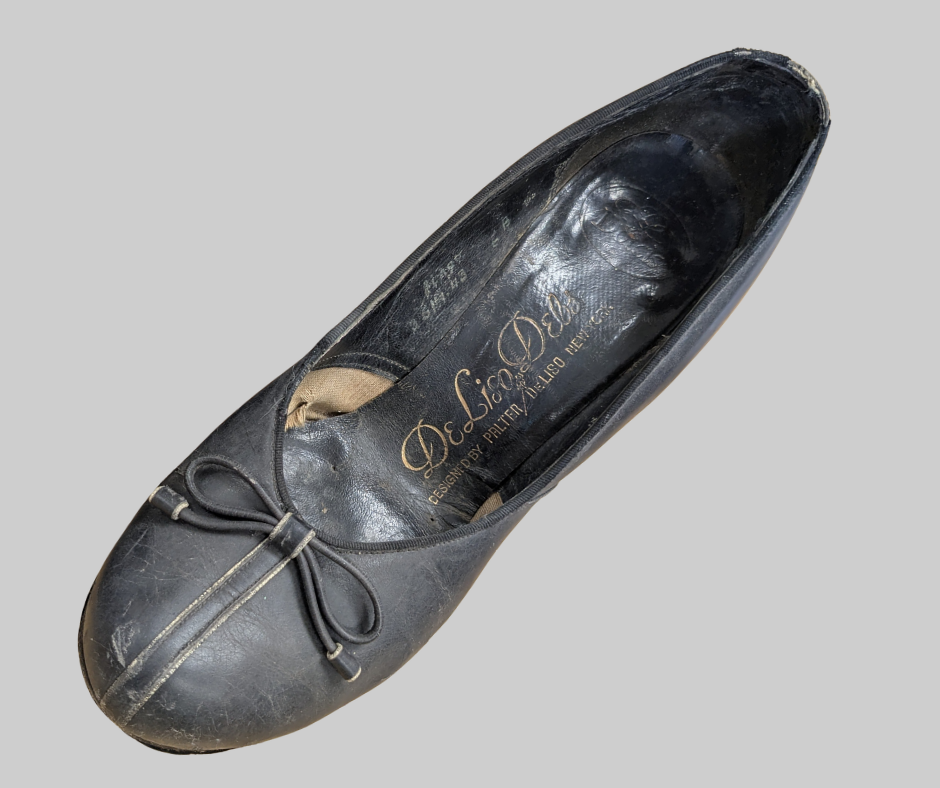
At first glance, these shoes may appear to be a simple pair of black heels that have seen better days. Yet beneath their slightly worn and shabby exterior lies an important story of mid-twentieth-century female fashion and lived experience. Donated to the museum in 2009 by Mrs Sylvia Miller, the shoes were said to have formed part of her ‘going away’ outfit. As such, they would have been a carefully considered element of her ensemble, signalling femininity, respectability and a new social status at a crucial moment in her life.
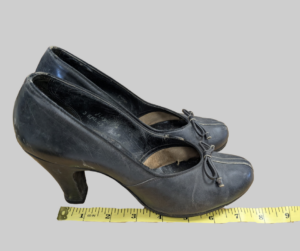
During the 1940s and 1950s, women were required to fulfil multiple and often competing roles. While many stepped into men’s positions in the workplace during the war, they were also expected to maintain the home, raise families, manage finances, navigate rationing and provide nutritious meals, all while ‘keeping up appearances’. Clothing and accessories (including footwear) played a crucial role in meeting these social expectations, balancing practicality with style. These De Liso Debs shoes were part of a line created specifically for the emerging teenage market of the 1940s and 1950s. Contemporary advertising described them as being ‘alive with youth’, appealing to a generation eager to express optimism and identity through fashion. Their curvaceous silhouette, rounded toe and Spanish heel offered both elegance and stability. Compared with the decades that came before and after, mid-century heels grew flatter and chunkier, enabling women to meet the demands of daily life while still preserving a feminine appearance.
During the war years, utility clothing designed by leading designers ensured access to well-made garments across social groups. Alongside advances in ready-to-wear fashion and mass production, this supported the growth of retail chains such as Dolcis, benefitting women like Mrs Miller. Influenced by American style and culture, shoes like these were versatile enough to be worn from the workplace to the shops or even the dancehall. Examples of Palter De Liso shoes are now held in collections such as The Metropolitan Museum of Art in New York, highlighting their cultural significance.
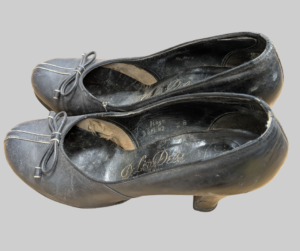
The Palter De Liso brand was founded in 1927 by Daniel Palter and Vincent de Liso and is credited with introducing the open-toe sling-back pump, which received a Neiman Marcus Fashion Award in 1938. By the mid-twentieth century, the company had established itself as a luxury brand, advertising in publications such as Vogue and promoting footwear that combined fashion with function. At the same time, shoe companies such as Clarks employed many glamorous Hollywood film stars to market footwear during periods of rationing and austerity. This offered everyday women aspirational images and arguably, a much-needed lift to morale. Designed to be stylish, durable and accessible, the De Liso Debs shoes help explain both the recent revival of the Palter De Liso brand and the continued appearance of similar examples on auction and vintage websites today.
Objects like these can move through new life stages of reuse and reinvention, an approach that feels newly relevant in times of financial uncertainty. For these reasons, shoes with stories like these deserve a place in museums.
References:
Building Our Past – Dolcis: The World of Fashion at your Feet
Love Beverly Hill – Palter DeLiso