In the module ‘Every Object Tells a Story,’ Anglia Ruskin students have learned that objects are not just remnants of the past but active historical sources revealing how people lived and understood their world. This article is part of an online exhibition that showcases the museum’s collections and highlights the importance of object-based learning. We invite you to join us as we uncover the unique stories behind various objects and what they reveal about our past.
1947 Hercules ‘Stirling’ Roadster Bicycle
Tim Lemley Jr
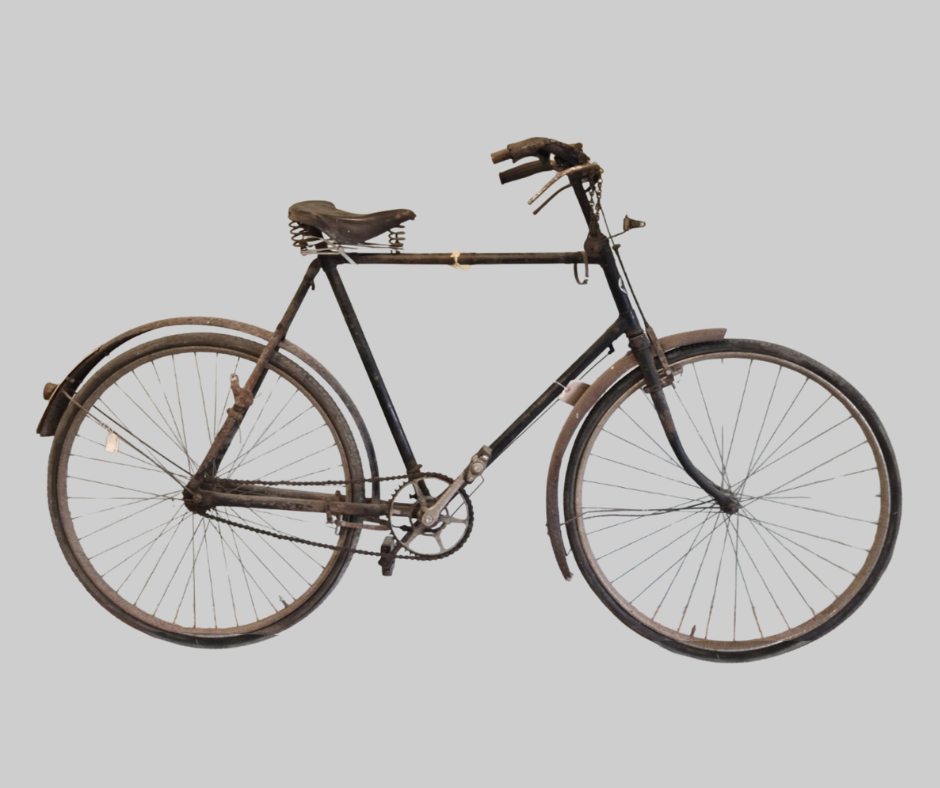
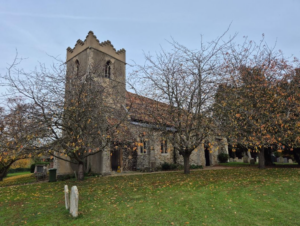
This is a c.1947 Hercules ‘Stirling’ Roadster bicycle. The ‘Stirling’ was donated to the museum by the family of Reverend Paul R. Smythe in 1997 after years in storage. Reverend Smythe was the Anglican vicar of St. Peter’s Church of Horningsea, Cambridgeshire (Figure 1) from about 1944 to 1985. The bicycle would have been ridden between local churches to visit parishioners and while running daily errands. Its history is written into its patterns, scuffs, and scratches. Smythe’s addition of a light system, repairs, and maintenance shows thrift and care to keep it working for decades.
The bicycle highlights a vicar’s life of service as he rode the rounds of his parish. This use was highlighted in the BBC television series Father Brown, where Father Brown was commonly seen using a very similar bicycle, making journeys around his parish. In the years after the Second World War, it was a common sight to see clergy and locals riding bicycles across the fenlands. The bicycle was a tool for work, transportation, and a form of recreation.
The bike’s present condition shows that it was stored for a prolonged period with little to no use or maintenance. Many parts are covered in rust from exposure to the environment and time. Black paint is visible in places covering the frame, but much has flaked away, revealing the original metal frame. Surface corrosion and disuse restrict the movement of the chain and rear wheel unless much force is applied. Although the handlebars and bell are covered in rust, the handbrake still functions, but it probably would not stop the bicycle effectively.
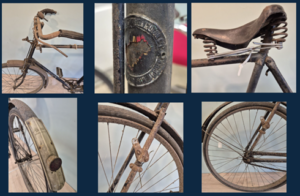
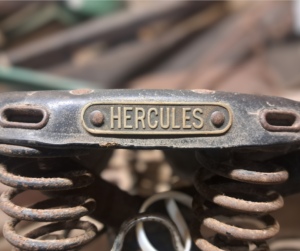
The rubber handlebar grips are stiff, cracked, and melted. Looking below the handlebars at the head tube, a chipped and damaged Hercules badge can be seen. Moving back along the top tube, we arrive at the original seat. The ‘Stirling’ has a worn and cracked original leather saddle, but the mount has corroded and broken from the seat tube. Moving down toward the wheels, the mudguards are bent and rusty. Rusted mounts for a headlight and a rear wheel-driven dynamo, with attached broken wires, are present. We can see evidence of scuffed pedals and damaged spokes, probably caused by the damaged and potholed roads the owner travelled. The bicycle records a history of the second half of the 20th century through the journeys and repairs of its owner (see figure 2).
The bicycle design prioritised durability and repairability. A heavy-gauge steel frame, simple drive train, and strong components were constructed to be fixed by their owner or local repair shops. Reverend Smythe could easily fix punctures, oil the chain and replace the tyres at home for a minimal cost. It was a time when new items were scarce and expensive, requiring people to repair, be resourceful and extend the life of things they already owned.
Hercules Company History
The Crane brothers of Aston, Birmingham, founded Hercules Bicycle Company in 1910. They rapidly earned a reputation for building sturdy, reliable and reasonably priced bicycles. The company name, Hercules, was picked to embody strength and dependability, which they built into their frames and components. Hercules was built into one of the 20th century’s best-known bicycle manufacturers. Their products were used for transport, recreation, and commercial purposes.
Their products were used for transport, recreation, and commercial purposes. The Hercules factories formed part of a dense Midlands industrial landscape. They set themselves apart in the cycling industry by making their own components, other than tyres, which were manufactured by Dunlop Rubber.
After the Second World War, the UK bicycle industry consolidated as it faced increased external pressures. Hercules bikes were still valued for their strength and reliability, but rising material costs and worldwide competition forced them to change their manufacturing model. The original factories in Aston and their supporting industries were forced to downsize and restructure. Production and manufacturing started to move overseas.
Legacy and the brand today
Hercules bicycles are no longer manufactured in the UK. From 1951, the brand was solely manufactured in India as part of a cycling and industrial partnership. Modern Indian factories produce a large range of Hercules bicycles for domestic and export markets. The move from Aston to India is part of a larger 20th-century story of industry moving abroad, where manufacturing costs are lower. Regardless of these changes, the Hercules badge has crossed national boundaries, but its identity as reliable transportation has continued.
Significance at Denny Abbey and Farmland Museum
Reverend Smythe’s bicycle connects memory with economic and social history. By maintaining the bicycle in its worn and rusted condition, we are better able to imagine how it was used and kept. Not only can we see the story of a small parish vicar’s life and everyday journeys, but we are better able to understand the story of British industry. If you look carefully, you are connected with past life and can see how many stories are embedded in seemingly ordinary things.
References: