In the module ‘Every Object Tells a Story,’ Anglia Ruskin students have learned that objects are not just remnants of the past but active historical sources revealing how people lived and understood their world. This article is part of an online exhibition that showcases the museum’s collections and highlights the importance of object-based learning. We invite you to join us as we uncover the unique stories behind various objects and what they reveal about our past.
The Eel Glaive: A forgotten tool for a forgotten industry
Lucas Dickson
The eel glaive is an object with many associations to local social history. It was primarily used as a piece of fishing equipment designed to capture large quantities of eels for mass human consumption. For centuries, eels were an easily obtainable, popular food source found in large numbers across northern Europe. However, they became a particularly infamous commodity within the Fenland region of England. Unlike most available provisions, eels required little preparation and could be eaten in a variety of ways. During the medieval period, eels were regularly in high demand, being sought after by both the common peasantry and the renowned nobility.
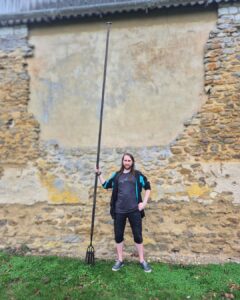
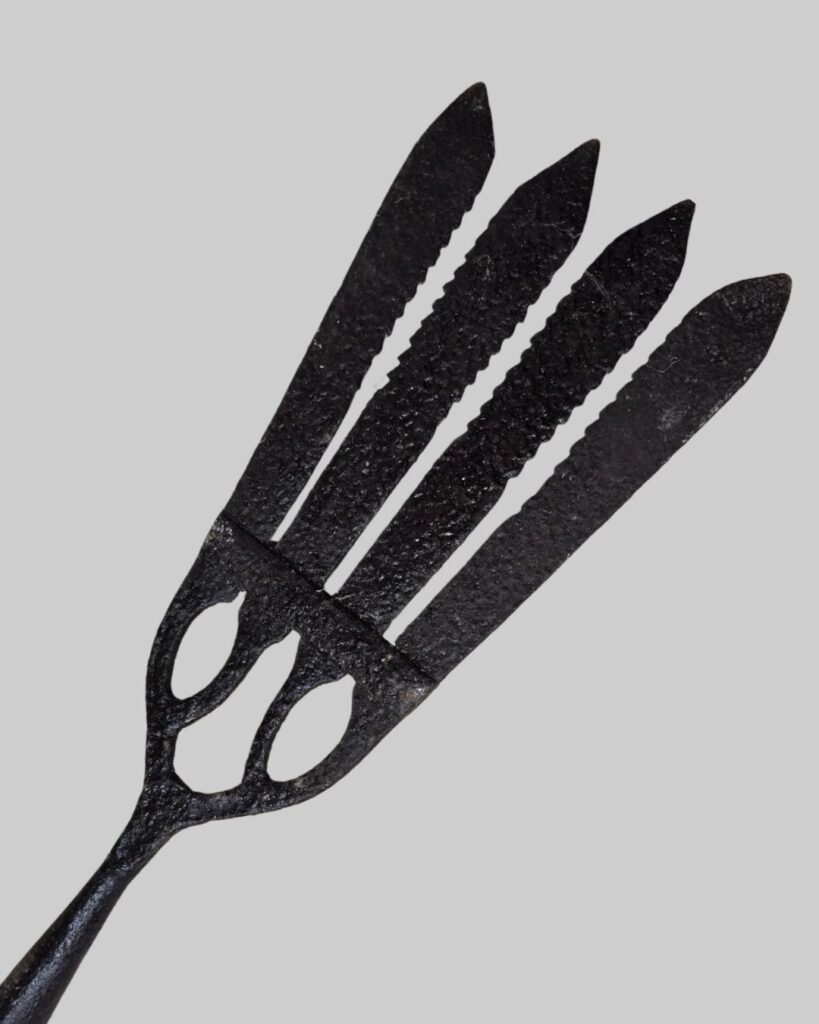
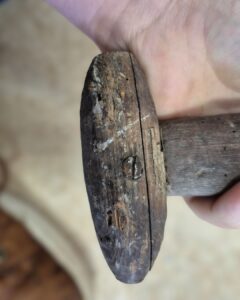
This eel glaive is equipped with an extended four-meter-long wooden pole, suggesting that this example would have been used in much deeper waters. A handle is also located at the end, likely added to counteract the extensive reach of this item whilst also providing the user with a more effective grip. The spearhead features four serrated blade edges, or prongs. These are hastily welded together using a single iron plate. Most eel glaives would have possessed between three and six different prongs. Despite appearances, the eel glaive was not devised to kill its intended targets; instead, the glaive would be used to collect groups of live eels caught between the serrated prongs.
Live eels could be protected and stored for transit to further locations to be sold at a much higher potential profit. In operational use, the eel glaive was mainly utilised at night; in these conditions, fishers could make use of lanterns to consolidate swarms of eels. Once the warm light revealed the eels, the fishers would then scrape away with eel glaives in the shallow mud, gathering large quantities of eels. The serrated edges would make it difficult for eels to escape.
Most people who worked with eel glaives were considered social outcasts. They were required to perform long night hours, whilst in almost complete isolation. This, however, was the most beneficial time to fish for eels. The typical eel fisher would gather samples at night, then travel to the nearest settlement and distribute the stock during early morning. This was exacerbated during the autumn to winter months, which were considered the prime seasons for gathering eels. Despite the lacklustre working conditions, this market secured employment for generations of people living in the Fens. For centuries, it was an economically viable trade, capable of giving hundreds of families financial stability.
In the modern day, the eel glaive has become a largely forgotten piece of material culture in England outside the Fenlands. The eventual downfall of the eel glaive came during the turn of the 19th century, which coincided with several major geographical changes to the area. Historically, the Fenland region of the country had been almost completely submerged, which created an expansive marshland with little accessible space for human cultivation. This, however, was the perfect habitat for eels to thrive in greater numbers. Starting in the mid- to late-1600s, actions were taken to eventually drain the water from the area. Over the course of three centuries of consecutive labour, the natural habitat became almost unrecognisable. This subsequently damaged the momentum of the eel fishing market, with the new environment providing a severe reduction in eels. The new land quickly obtained new ownership, which prevented common access to the few remaining fishing locations.

Credit: Tilman2007, via Wikimedia Commons
The eel glaive, despite becoming redundant and void of practical purpose, has continued to remain relevant in many small communities across the Fens. It has become synonymous with tradition and local heritage, representing many aspects of rural life. The eel glaive continues to be featured in media, literature and town monuments commemorating the object’s affiliation with Fenland history. Additionally, two eel glaives make appearances on the Ely city crest. Highlighting the object’s importance in shaping the cultural identities of Ely and its residents.
The eel glaive, as a piece of material culture, reveals many aspects of the people, environment and times it was used in.