In the module ‘Every Object Tells a Story,’ Anglia Ruskin students have learned that objects are not just remnants of the past but active historical sources revealing how people lived and understood their world. This article is part of an online exhibition that showcases the museum’s collections and highlights the importance of object-based learning. We invite you to join us as we uncover the unique stories behind various objects and what they reveal about our past.
The Farmhouse Clock that kept more than time
Neha Raskesh
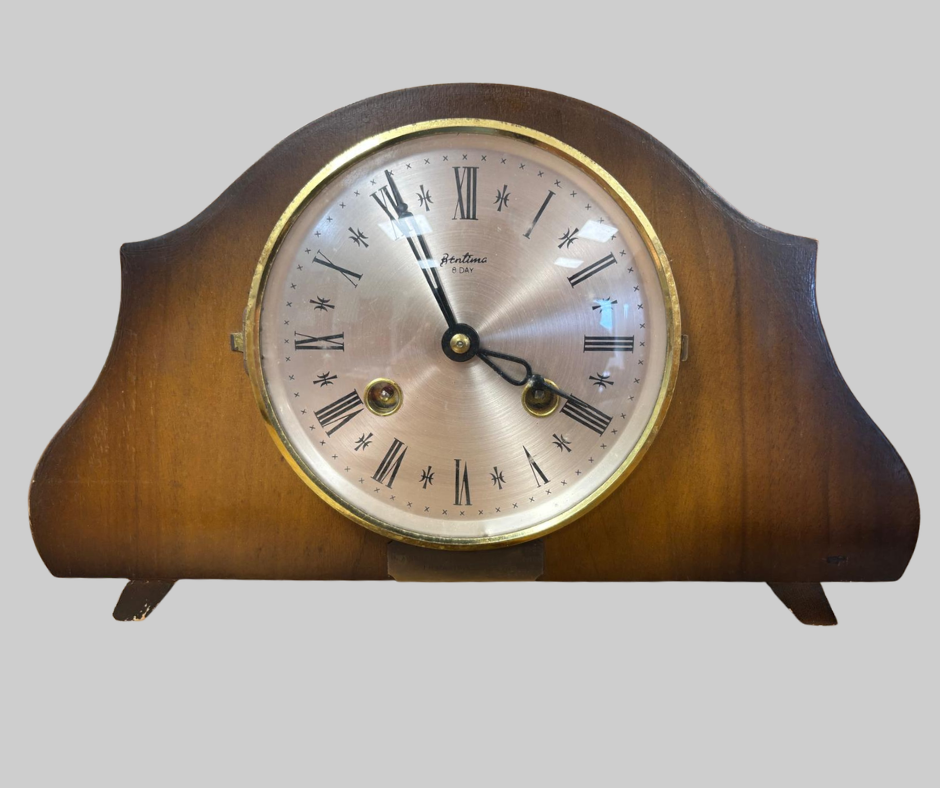
Most objects in a museum sit silently, but some seem to whisper stories the moment one looks at them. This small wooden mantel clock is one of those pieces that is gently curved and warm in colour. At first glance, it is a regular household item that once told the time, but it opens a window into everyday life, memory, craft and the long history of home comforts across rural Britain.
A familiar object with an unfamiliar story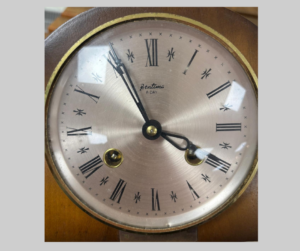
This mantel clock has a polished wooden case, a silvered dial and a curved shape that made it popular in British households during the mid-twentieth century. Bentima made this clock, renowned for its dependability. The clock required weekly winding.
More than a timekeeper
The primary purpose of the mantel clock was to tell the time for daily routines. However, they also had other roles, such as social expectations, domestic rhythms, and the structural cultural values of British people. They were a quiet symbol of household pride and a focal point of the living room.
In regular maintenance, specifically the ritual of winding, was closely associated with notions of responsibility, order and care. The presence of a chiming mechanism established an element of sensory pleasure and refinement. The reliability and precision of a mechanical clock indicated both a reassuring form of stability and technological progress during times of wider social and economic change for older generations growing up in periods of limited electrification.
These meanings became even more pronounced within a farmhouse environment. The natural rhythms of weather patterns, seasons and sunrise governed agricultural life. However, the ownership of a precise mechanical timekeeper marked an alignment with emerging demands of modern time discipline, incorporating increasingly standardised working hours, market openings, school timetables and bus schedules. Therefore, the clock reflected a transition between the growing impact of clock-regulated modern society and traditional rural temporality.
Learning from the Clock
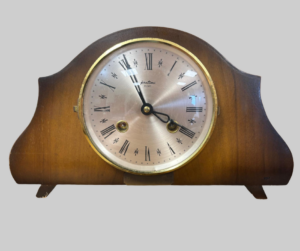
This mantel clock will evoke memories for several visitors, including the careful weekly winding done by a family member long gone, the slow tick during winter evenings and the chime sounding. Its worn keyhole, faint scratches and gently aged case reflect that it was utilised lovingly for decades, though it is not possible to tell who owned this clock.
Mechanical clocks were once expensive specialist items. Mass production had made them affordable to ordinary families, and its presence in a rural home reminds us that countryside life was never old-fashioned and static, and people adopted new technologies enthusiastically and steadily.
The household clock governed the day before smartphones and digital screens. The decisions of waking up, cooking and resting were anchored to the tick of an object like the clock. This object kept track of arrival times of visitors, market days and milking schedules on farms. The clock shaped the pace of the household as well as community life.
A surprising object for a farm museum
A simple mantel clock can seem out of place among the agricultural equipment, tools and tractors of the Farmland Museum. On the contrary, rural life was defined by family rhythms, routines and homes. This object also reminds us that the countryside was never isolated. Rural homes were connected to craftsmen who made clocks, families across generations and shops in market towns. Pieces of all these relationships are carried by such a little clock.
A comparison to everyday life
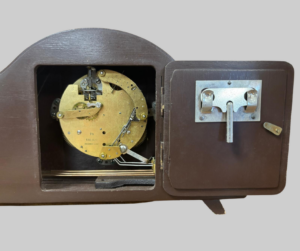
The winding arbours, the hanging hook and the small door reflect how the clock was utilised. Someone dusted the case, opened that door every week, listened for its chime and checked whether it was running fast or slow. Attention and patience were also needed when maintaining the clock, with the owner adjusting and winding it each week. The relationship between object and person becomes almost conversational as the clock reveals its requirements and the owner responds. This mantel clock invites people to think differently about time in a world of automated time signals, smartphones and digital clocks.
Objects like this mantel clock help us to remember that rural history is not just about machines in fields, but also memories, routines, relationships and homes. This wooden clock reminds people that objects do not truly stop working when they stop working.